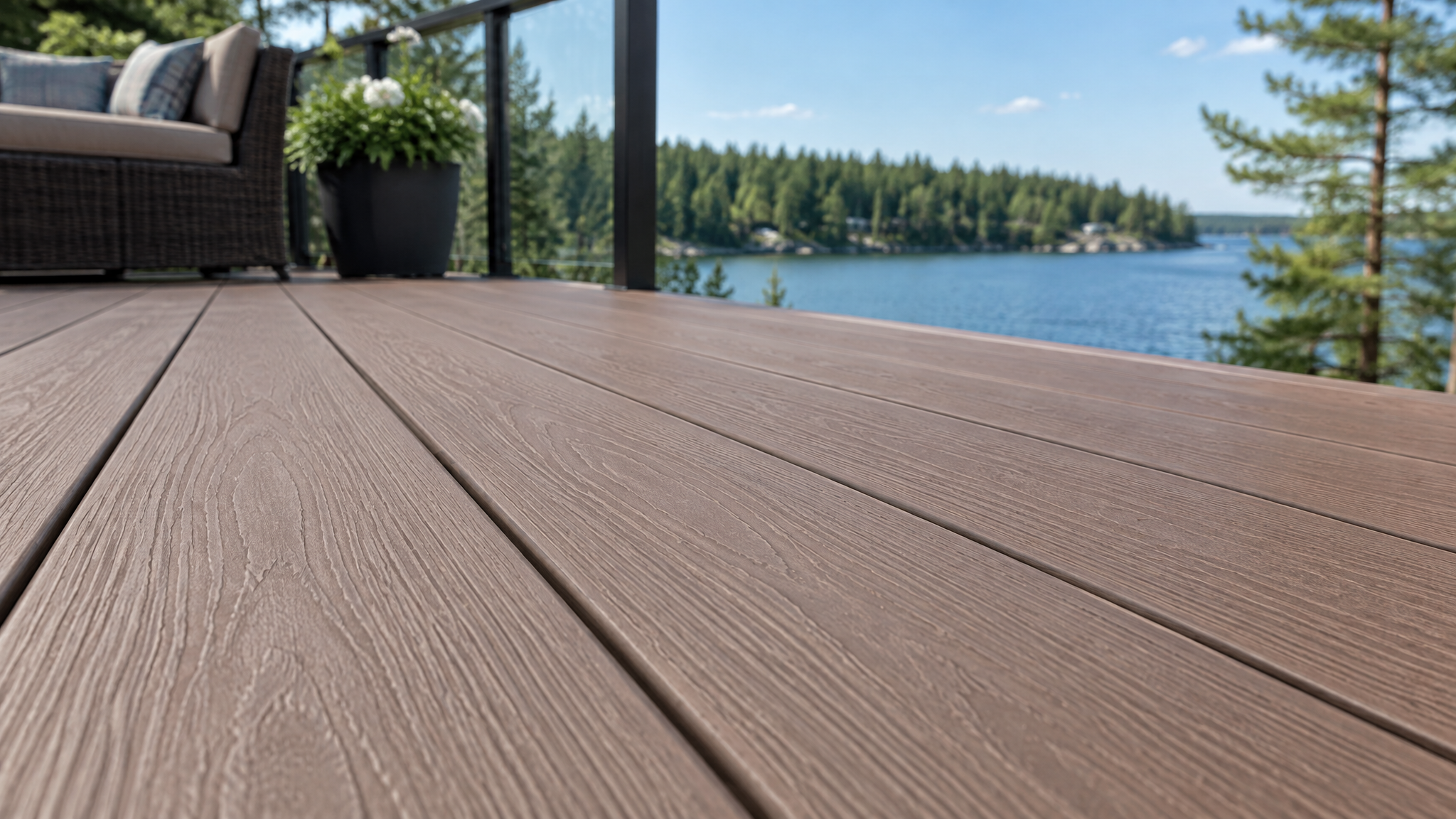
If you are building a new deck on your Muskoka property, you are going to face this decision early: composite or cedar? Both are solid choices for cottage country. Both handle the climate. But they are fundamentally different products with different costs, maintenance demands, lifespans, and aesthetics. This guide breaks down the comparison so you can make the right call for your property.
The Basics: What Each Material Actually Is
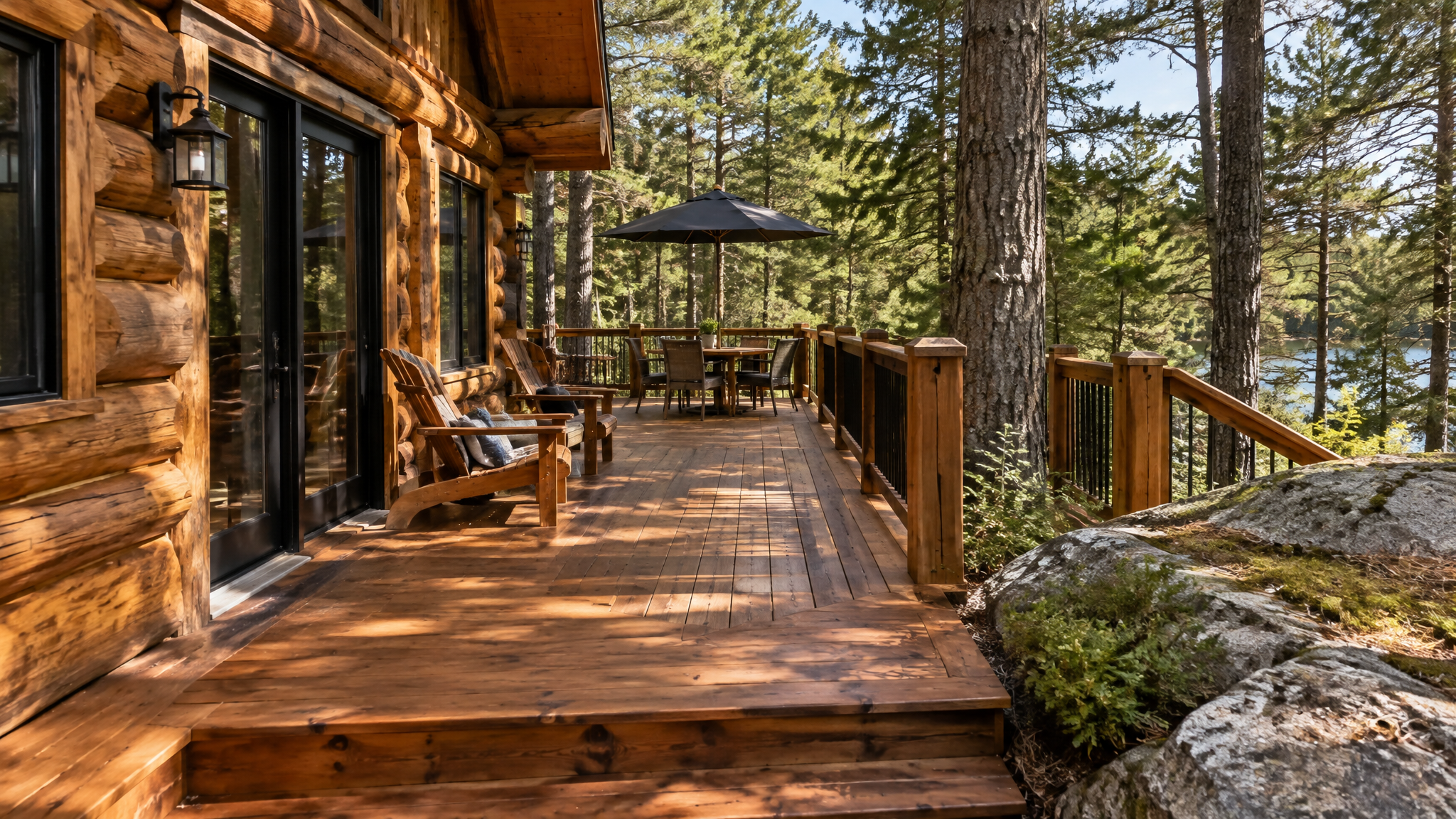
Cedar decking is natural wood, specifically western red cedar (Thuja plicata). It is harvested primarily from British Columbia and has been used in cottage country for decades. Cedar contains natural oils that make it resistant to rot, decay, and insect damage. It is a renewable resource, and when it reaches the end of its life, it biodegrades.
Composite decking is a manufactured product made from a blend of wood fibres and recycled plastic (usually polyethylene). Premium composite boards have a polymer cap that protects the core from moisture, UV rays, and staining. Major brands include TimberTech, Trex, and Fiberon. Composite is not a natural material, but modern products look remarkably close to real wood.
Cost Comparison
Here is what you can expect to pay in Muskoka, installed, for a typical 300-square-foot deck:
| Factor | Cedar | Composite |
|---|---|---|
| Material cost per sq ft | $8 to $14 | $12 to $25 |
| Installed cost per sq ft | $55 to $85 | $65 to $120 |
| Annual maintenance cost | $500 to $1,200 (staining) | $50 to $100 (cleaning) |
| 20-year total cost (300 sq ft) | $26,000 to $49,000 | $20,000 to $37,000 |
Cedar wins on upfront cost. Composite wins over 20 years because it eliminates the recurring expense of staining every 2 to 3 years. That staining cost adds up. A professional re-stain on a 300-square-foot cedar deck in Muskoka runs $800 to $1,200 per application, and you will need 7 to 10 of those over 20 years.
Maintenance in Muskoka Conditions
Muskoka is hard on outdoor materials. The combination of intense summer sun, heavy rain, deep freeze in winter, spring thaw, and high humidity creates conditions that accelerate wear on everything exposed to the elements.
Cedar maintenance: Cedar needs re-staining or re-oiling every 2 to 3 years to maintain its colour and protect against moisture penetration. Without staining, cedar turns silver-grey within a season or two. Some owners like the grey patina. Most do not. Beyond staining, cedar decks need periodic board replacement as individual boards check, split, or cup over time. Annual inspections and spot repairs are part of owning a cedar deck.
Composite maintenance: Wash it with soap and water once or twice a season. That is essentially it. Premium capped composites resist fading, staining, mould growth, and insect damage. They do not splinter, check, or cup. There is no staining, no sealing, no sanding. For cottage owners who only visit on weekends and want to spend their time on the water rather than maintaining the deck, composite is a clear winner on this point.
Durability and Lifespan
Cedar: A well-maintained cedar deck lasts 15 to 25 years in Muskoka. The key word is "well-maintained." A cedar deck that is stained on schedule, kept clear of debris, and has damaged boards replaced promptly will last toward the upper end. A cedar deck that is neglected for a few seasons, especially through Muskoka winters, will deteriorate much faster. Rot sets in where moisture sits, and freeze-thaw cycles crack boards that have absorbed water.
Composite: Quality composite decking lasts 25 to 50 years. Premium product lines carry manufacturer warranties of 25, 30, or even 50 years that cover structural integrity, fading, and staining. Composite does not rot, does not attract insects, and does not absorb moisture. In Muskoka's freeze-thaw conditions, this is a significant advantage because the material does not expand and contract the way wood does when it absorbs and releases water.
Appearance and Feel
This is where cedar has a real advantage, at least for some people. Cedar is wood. It looks like wood, feels like wood, and smells like wood when you first cut it. The grain pattern, the warm reddish-brown tones, the slight variations from board to board, these are things that a manufactured product can imitate but not perfectly replicate.
Modern composite has come a long way. The best products have deep, realistic wood-grain textures with colour variation that mimics natural wood convincingly. From a few feet away, many people cannot tell the difference. But up close, and especially underfoot, cedar still feels different. It has a warmth and softness that composite boards, being denser and more rigid, do not quite match.
One thing to note: composite decking can get hot underfoot in direct sun. Darker colours absorb more heat. On a south-facing deck in full July sun, bare feet on dark composite boards can be uncomfortable. Cedar stays cooler because it is less dense and absorbs less heat. If you spend a lot of time barefoot on your deck, this is worth considering.
Environmental Considerations
Cedar is a natural, renewable resource that biodegrades at end of life. However, it is harvested from old-growth and second-growth forests in British Columbia, and there are legitimate concerns about the sustainability of continued harvesting at current rates.
Composite decking is made partly from recycled materials (post-consumer plastic and reclaimed wood fibres). It does not biodegrade and is difficult to recycle at end of life. However, its longer lifespan means fewer replacements over time, and it does not require chemical stains or sealants that can run off into the lake or soil.
Which Should You Choose?
There is no universally "better" option. The right choice depends on your priorities:
Choose cedar if: You want the natural look and feel of real wood. You do not mind the maintenance schedule. Your cottage has a traditional aesthetic where natural materials matter. You want to keep initial costs lower. You prefer a cooler deck surface in summer.
Choose composite if: You want to minimize maintenance. You plan to own the property long-term and want lower total cost over the deck's life. You want consistent colour and appearance year after year. You prefer a wider range of colour options.
We build both. We have no preference beyond what is right for your specific property, budget, and lifestyle. Get in touch and we will walk through the options with you on site.